
Your Room Doesn't Need More Decor. It Needs Better Lighting.
How to layer lighting for a warmer, more inviting home.
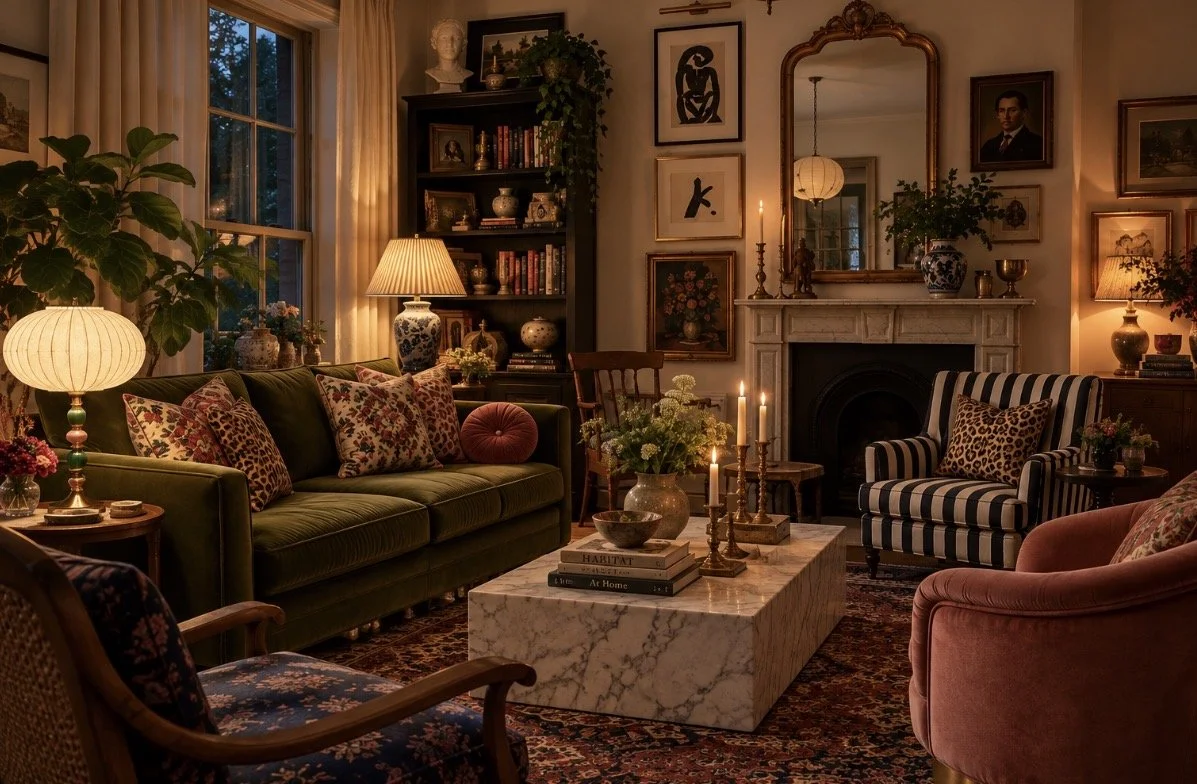
You know when you walk into a restaurant and immediately want to stay for six hours? Or someone's living room makes you want to curl up on their sofa and tell them your entire life story?
It's probably the lighting.
Meanwhile, you've spent months collecting furniture, finding the perfect rug, arranging your little objects, and your living room still feels vaguely like a dentist's waiting room.
Before you buy another throw pillow, turn off the overhead light.
Seriously.
Lighting is one of the easiest things to overlook when decorating, which is funny considering it changes how we see literally everything else in the room.
Color, texture, furniture, artwork. Even the most beautiful things can look a little unfortunate under the wrong lighting.
And while a gorgeous antique chandelier would be lovely, you don't need to rewire your house or spend a fortune to fix this.
You just need to learn how to layer your lighting.
First, Stop Making Your Overhead Light Do Everything.
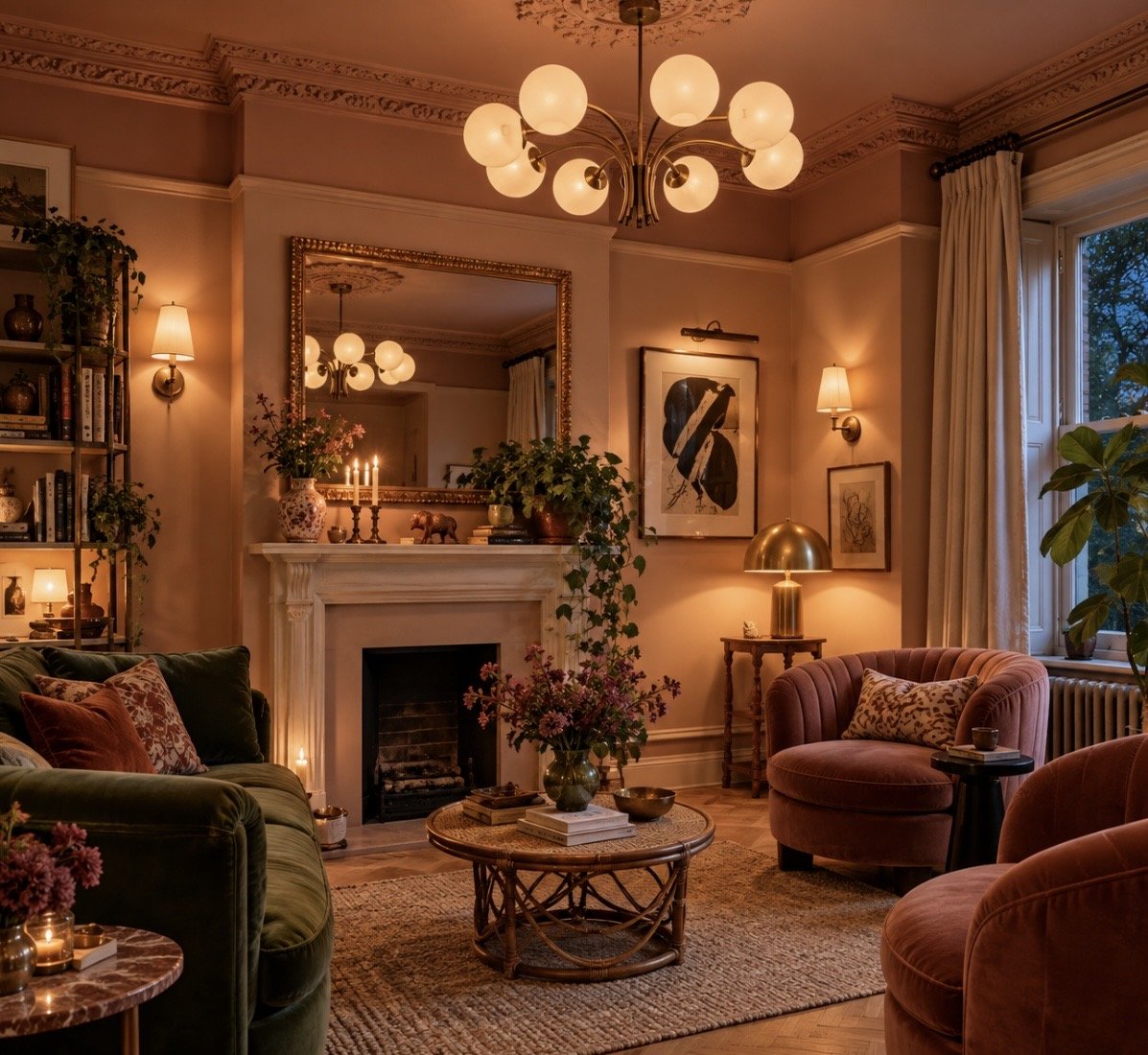
Overhead lighting has its place. Sometimes you need to see what you're doing. Cleaning, finding the earring you dropped, inspecting something suspicious on the carpet.
But it doesn't need to be your only source of light.
One bright ceiling fixture illuminating everything equally can make a room feel flat. Particularly if the bulbs are too cool, too bright, or positioned in a way that creates harsh shadows.
Think about the last cozy restaurant you visited.
Was the entire place illuminated by six recessed ceiling lights on full blast? Probably not.
There were little lamps on tables. Maybe some sconces. A pendant hanging over the bar. Different pools of light creating different moods throughout the room.
That's layered lighting.
And you can do exactly the same thing at home.
The Three Types of Lighting (And Why You Need More Than One)
Ambient Lighting
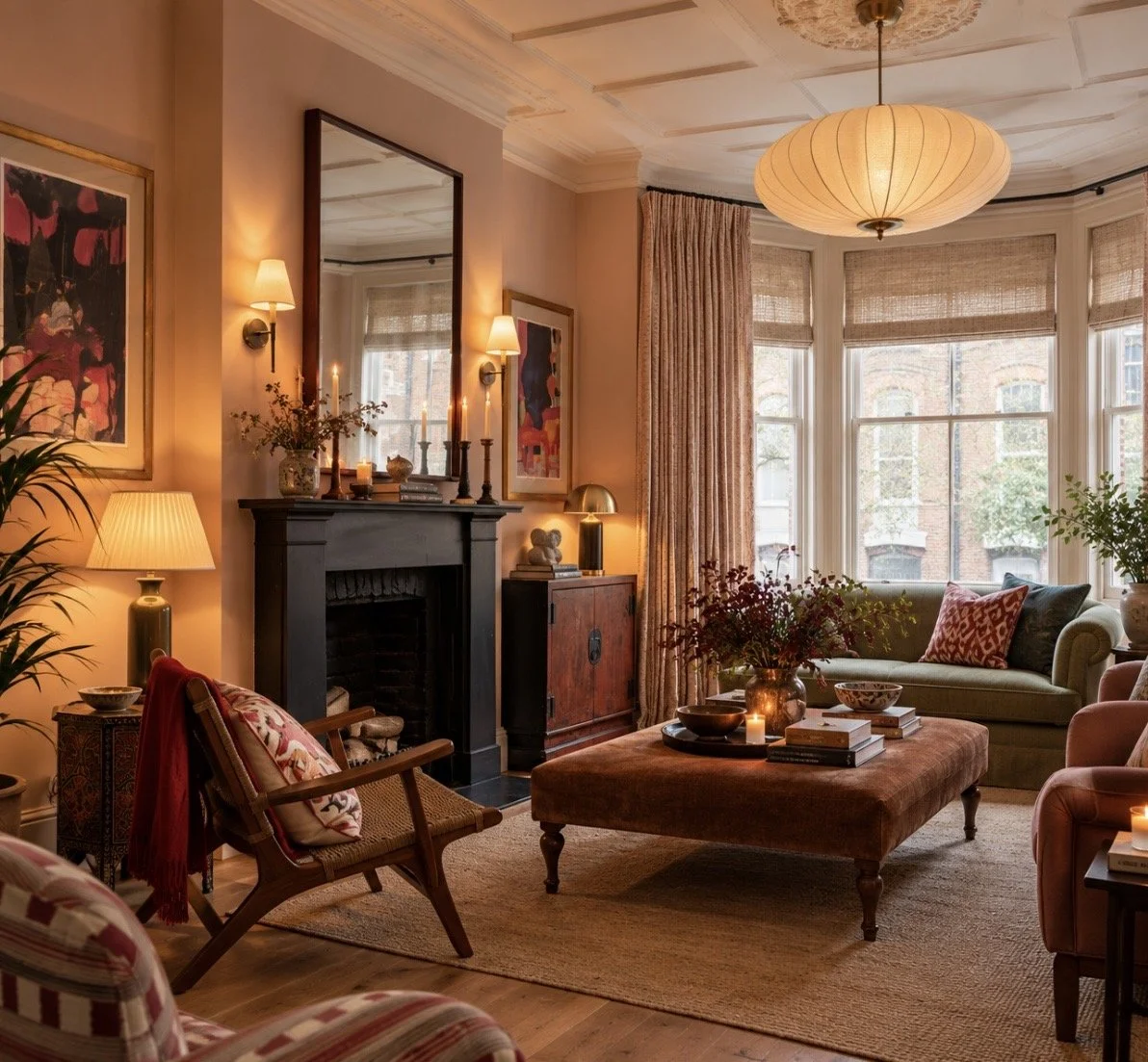
This is your general room lighting. The stuff that allows you to move around without walking into furniture.
Ceiling fixtures, recessed lights, wall sconces, and other sources that provide overall illumination.
It's the foundation, but it doesn't have to be the entire lighting plan.
If you have dimmers, use them. Being able to lower the brightness in the evening makes a surprising difference.
Task Lighting
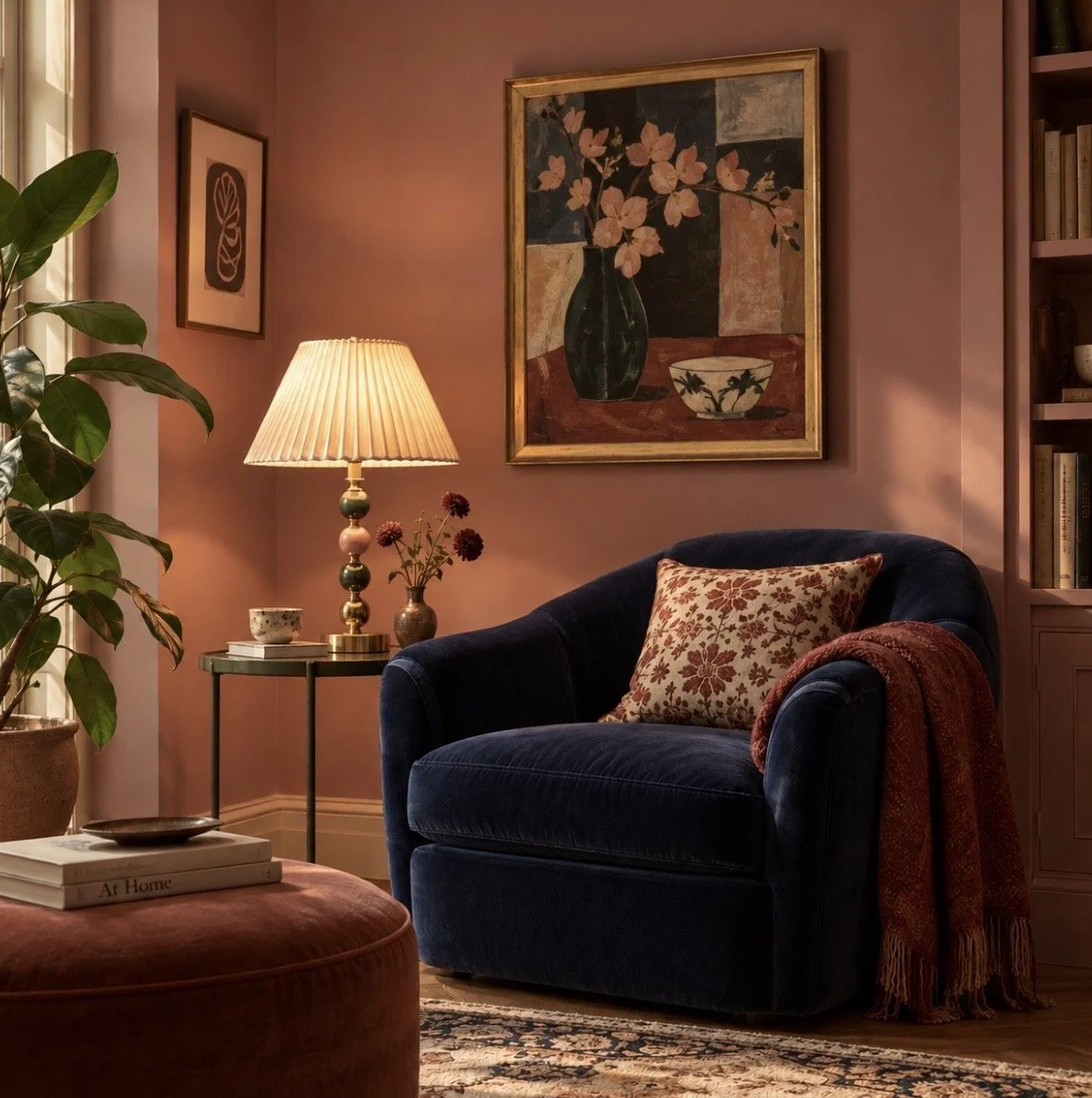
Lighting that helps you do something specific.
A reading lamp beside an armchair. A desk lamp. Under-cabinet lighting in the kitchen.
Rather than illuminating the entire room, it puts light where you actually need it.
And a nice lamp beside a chair does something else. It makes that little corner feel like somewhere you might actually want to spend time.
Accent Lighting
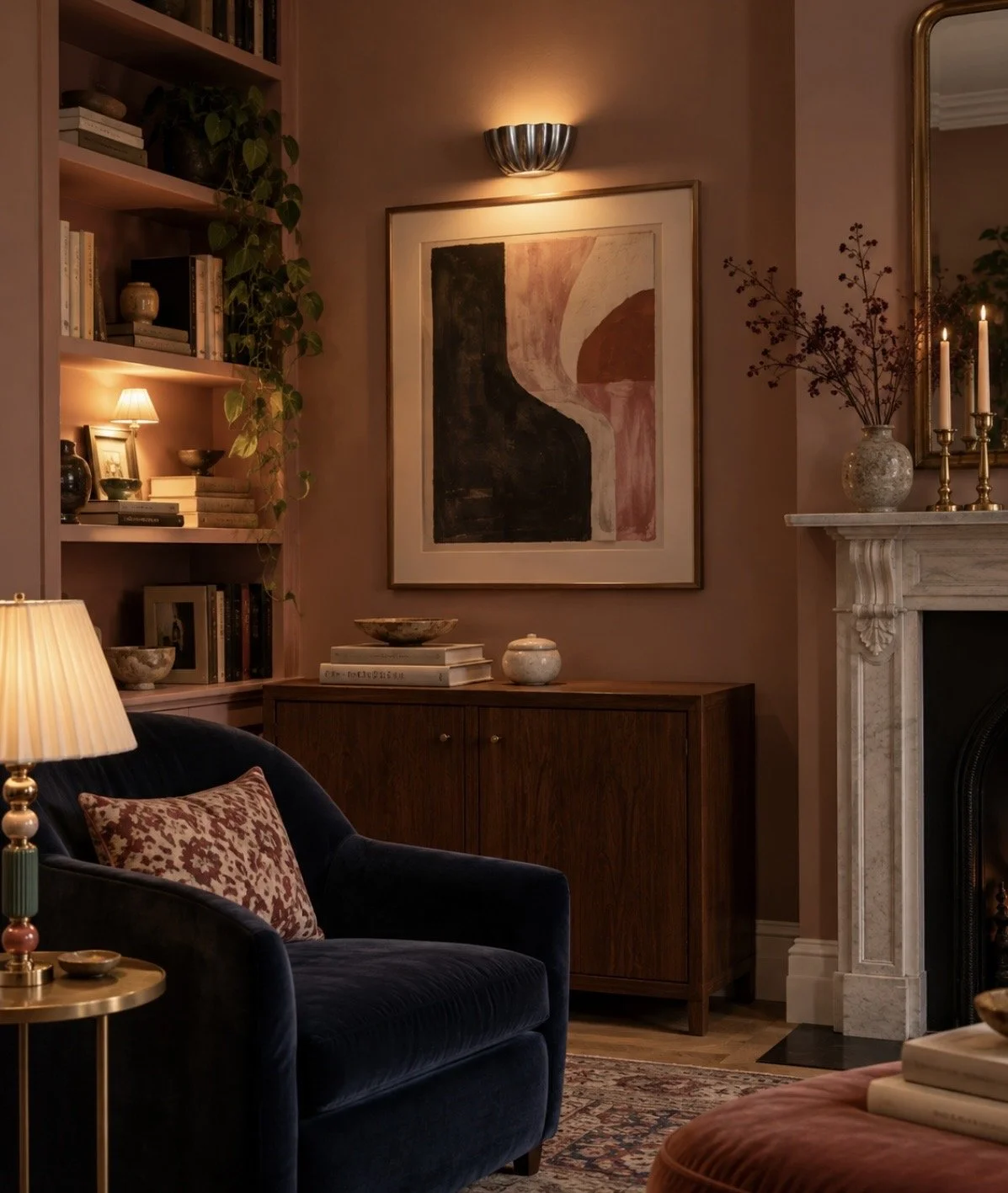
This is where things get fun.
Accent lighting draws attention to something. A painting, an interesting architectural detail, a bookshelf, a collection of objects.
It creates little moments throughout a room.
And no, you don't need a dedicated fixture for every category. A table lamp can provide task lighting while contributing to the overall glow of the room.
The idea is simply to stop expecting one light source to do every job.
How to Actually Layer Lighting in a Room
You don't need to start from scratch. In fact, I'd suggest doing a little experiment with what you already own before buying anything.
Here are five things to pay attention to.
1. Spread Your Light Sources Around
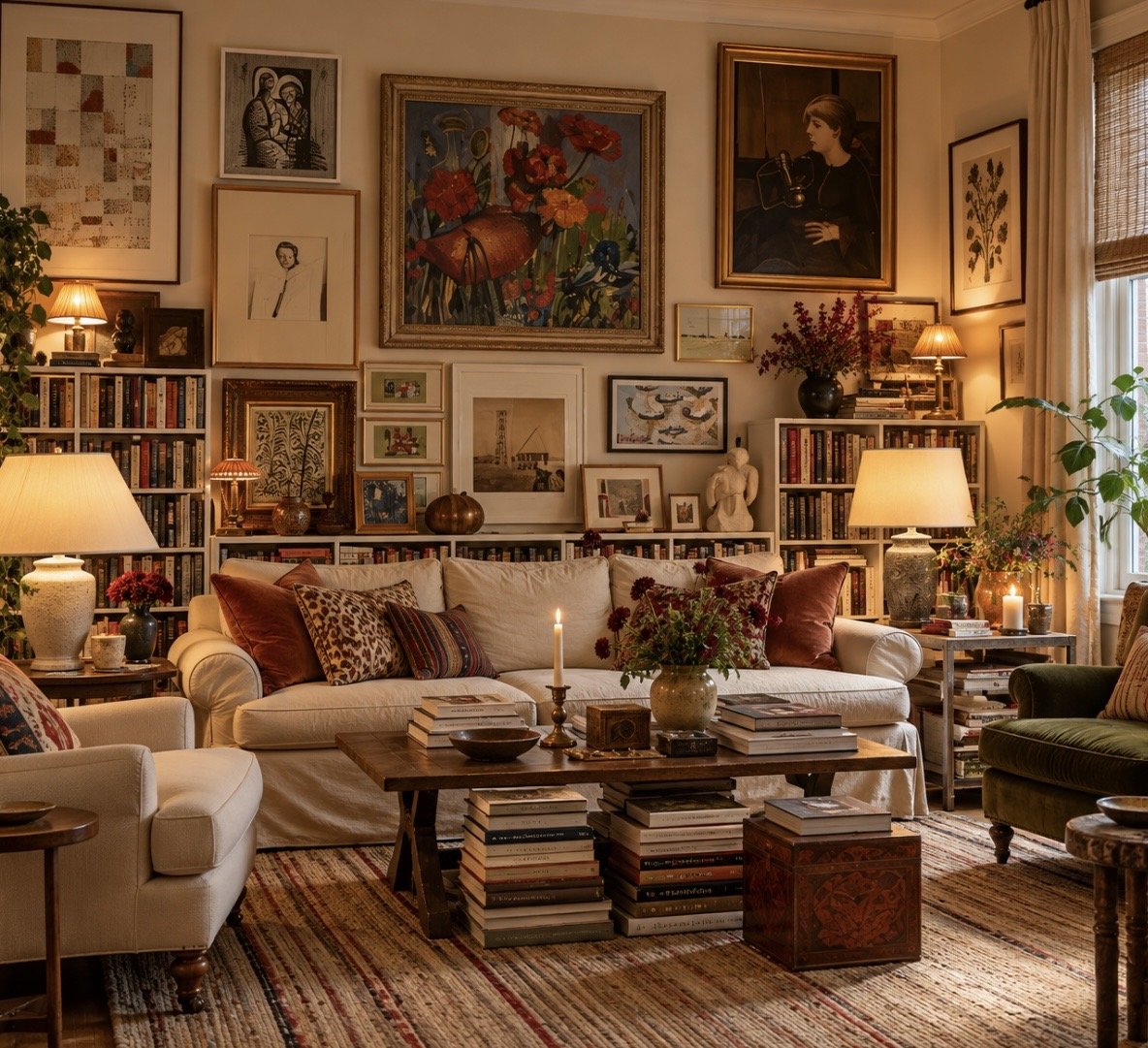
Start by turning off your overhead light.
What's left?
If the answer is complete darkness, we've identified our first problem.
Try adding a table lamp beside the sofa, a floor lamp near a chair, or a small lamp on a console.
Rather than concentrating all the light in one place, distribute it around the room.
Two or three smaller sources are a good starting point, depending on the size of your space and how you use it.
You want enough light to feel comfortable, with some variation between brighter and softer areas.
2. Check Your Bulbs.
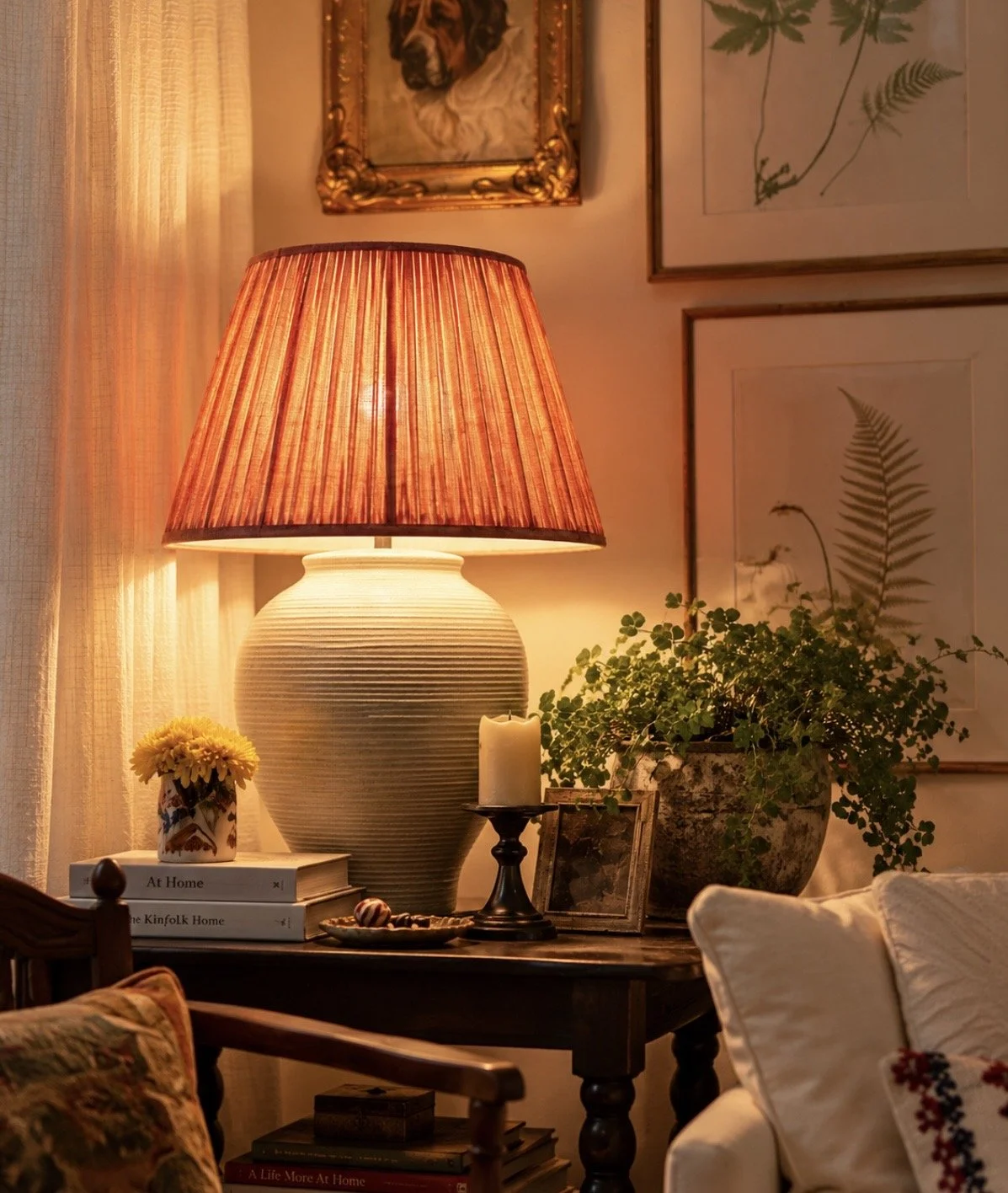
You can buy the most beautiful lamp in the world, but put a cold, blue-white bulb in it and suddenly you're performing minor surgery in your living room.
Pay attention to color temperature.
It's measured in Kelvin, and the lower the number, the warmer the light appears.
For living rooms and bedrooms, I generally like warm-white bulbs around 2700K. They give you that softer, slightly golden light that feels particularly lovely in the evening.
Also check the lumens, which tell you how bright the bulb is. A warm bulb can still be uncomfortably bright.
The goal is comfortable lighting, not living permanently in a candlelit cave. Although I do understand the appeal.
3. Vary the Height.
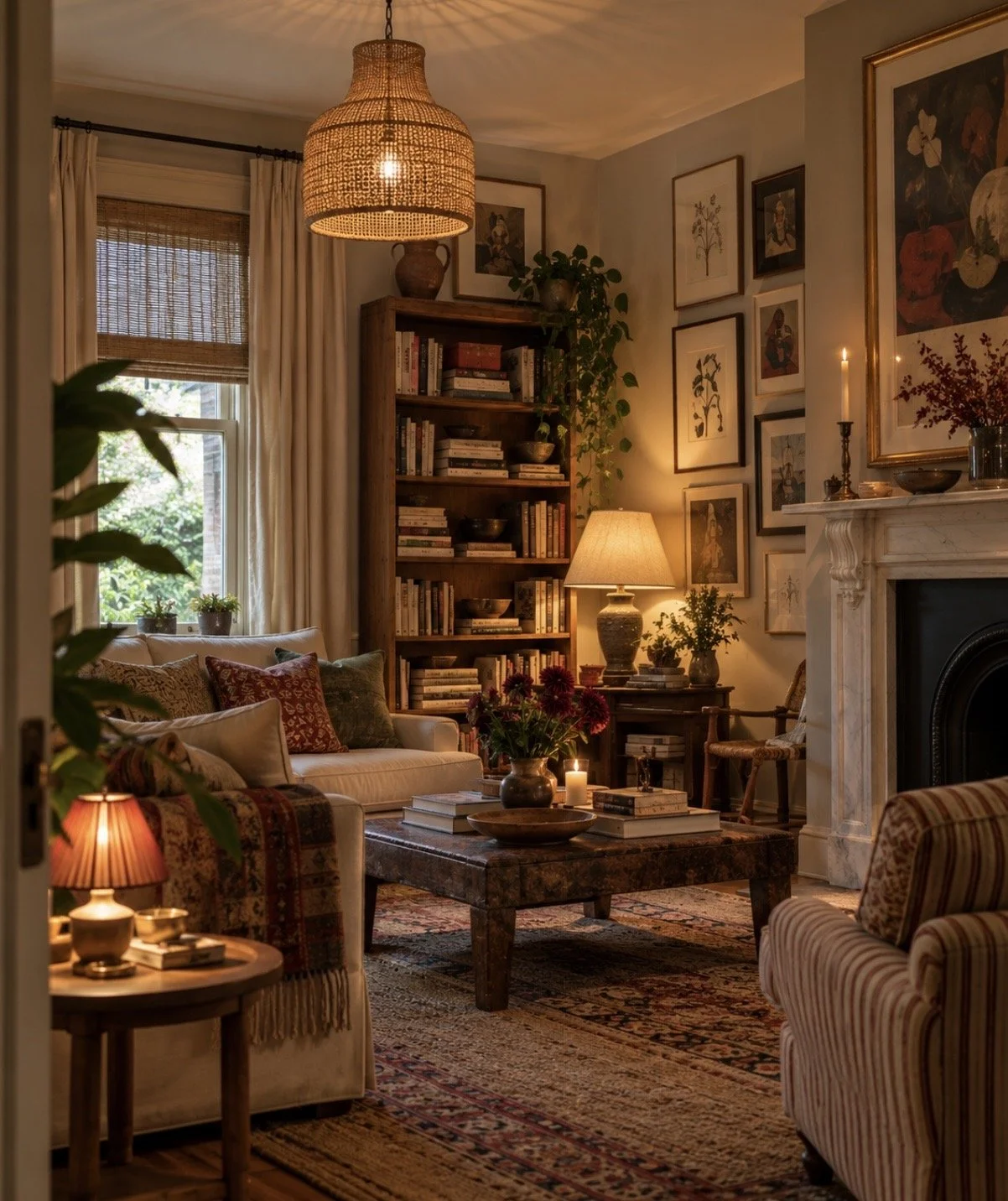
Try not to position every light source at the same level.
A floor lamp beside a chair, a table lamp on a console, and a smaller light on a low shelf will illuminate different parts of the room.
This creates depth and makes the space feel less uniformly lit.
Pay attention to where the light actually falls, too.
Does it illuminate a beautiful object? Make a dark corner more inviting? Cast an interesting glow against the wall?
Sometimes moving a lamp a few feet makes more difference than buying a new one.
4. Soften Things Up.
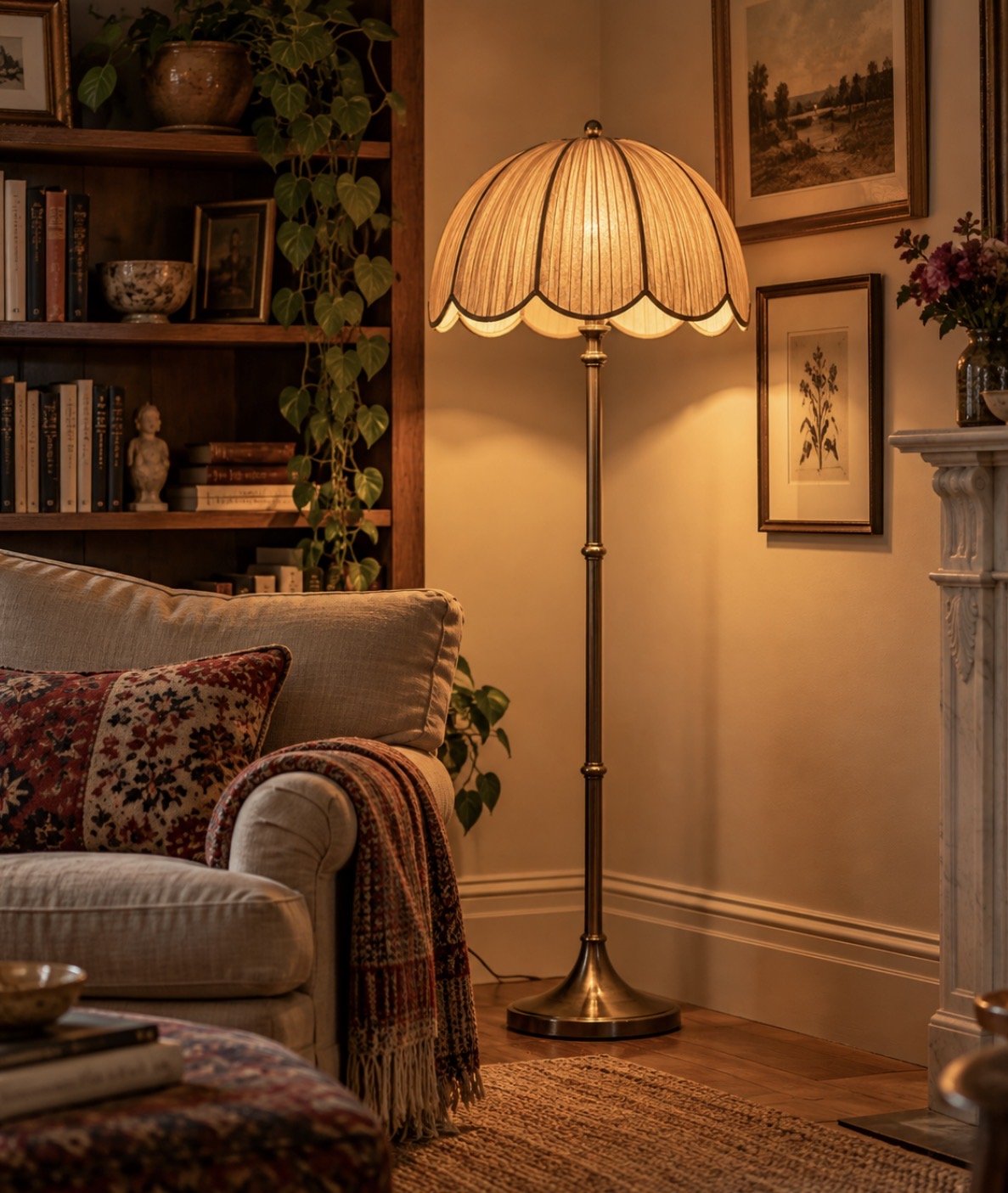
Exposed bulbs and direct glare aren't particularly conducive to a cozy evening.
Try fabric lampshades, frosted bulbs, or fixtures that direct light toward a wall rather than straight into your eyes.
I'm particularly fond of pleated and patterned shades.
They're decorative in their own right, and when illuminated, the fabric can create such a lovely soft glow.
A little pattern, a little texture, a little personality.
Much nicer than staring directly into a light bulb.
5. Make Little Pockets of Atmosphere.
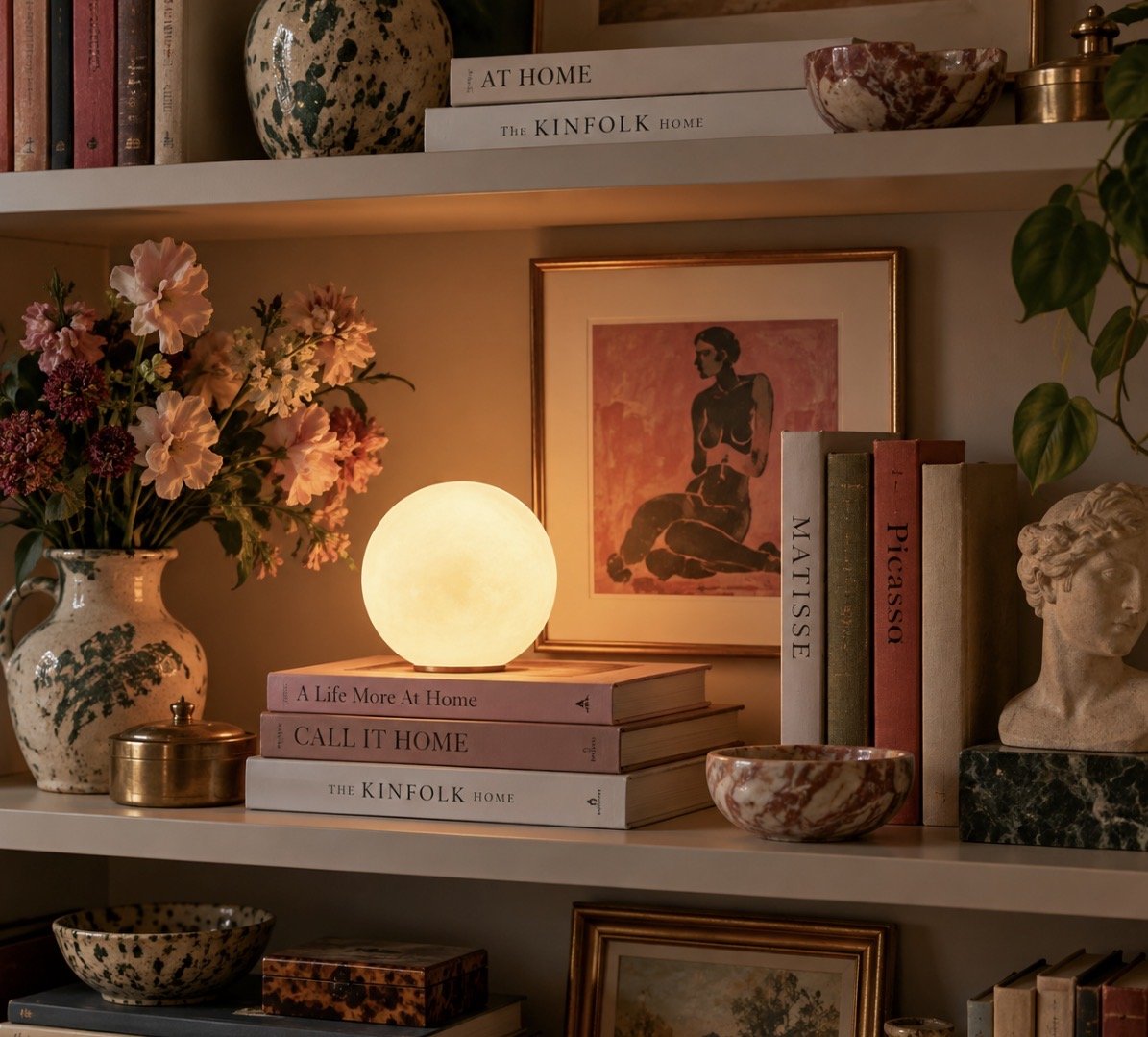
This might be my favorite part.
Not every corner of your room needs to be equally bright.
A small lamp on a bookshelf. A reading chair with its own light. A little glow on a side table next to a stack of books.
These are the details that make a room feel lived-in.
And they give you flexibility. You can have brighter lighting when you're doing something practical, then switch to a softer combination of lamps when you're winding down.
Your home can have different moods throughout the day.
As it should.
A Little Lamp With a Lot of Personality
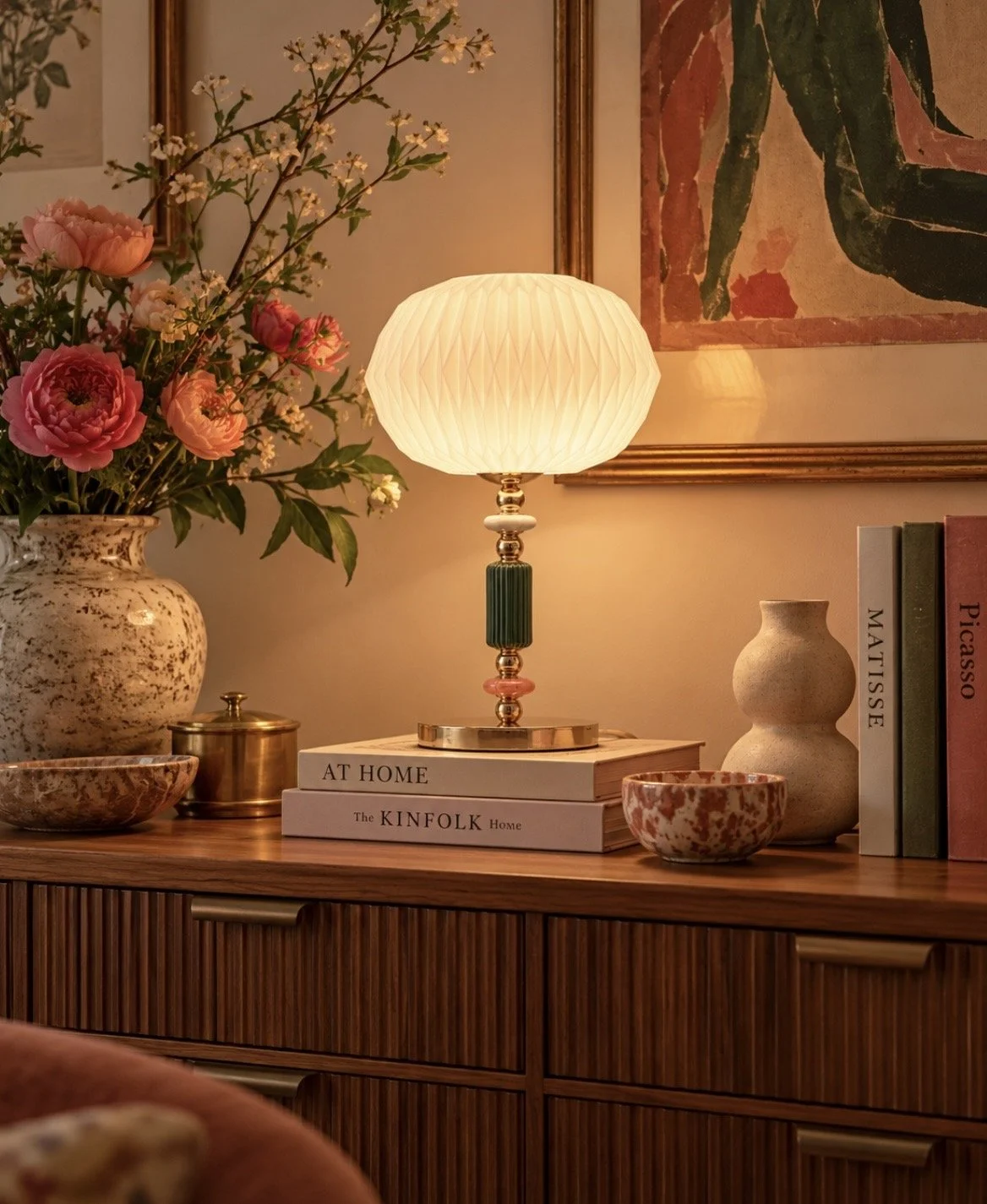
One of my favorite ways to add another layer of lighting is with a small decorative table lamp.
Preferably one that looks just as good switched off.
I'm talking interesting ceramic bases, pleated shades, scalloped edges, unusual silhouettes. Something that looks like it might have come from a very good antique shop.
A small lamp can completely change a neglected corner. And unlike a larger piece of furniture, it's relatively easy to move around until you find the right spot.
I've been looking at some lovely vintage-inspired options on Amazon that have that romantic, slightly whimsical Anthropologie feeling without the Anthropologie price tag.
A good reminder that you don't necessarily need to spend more to find something interesting. You just need to know what you're looking for.
Affiliate disclosure: This post contains affiliate links. I may earn a commission from qualifying purchases at no additional cost to you.
Before You Buy Anything Else, Figure Out What's Actually Missing.
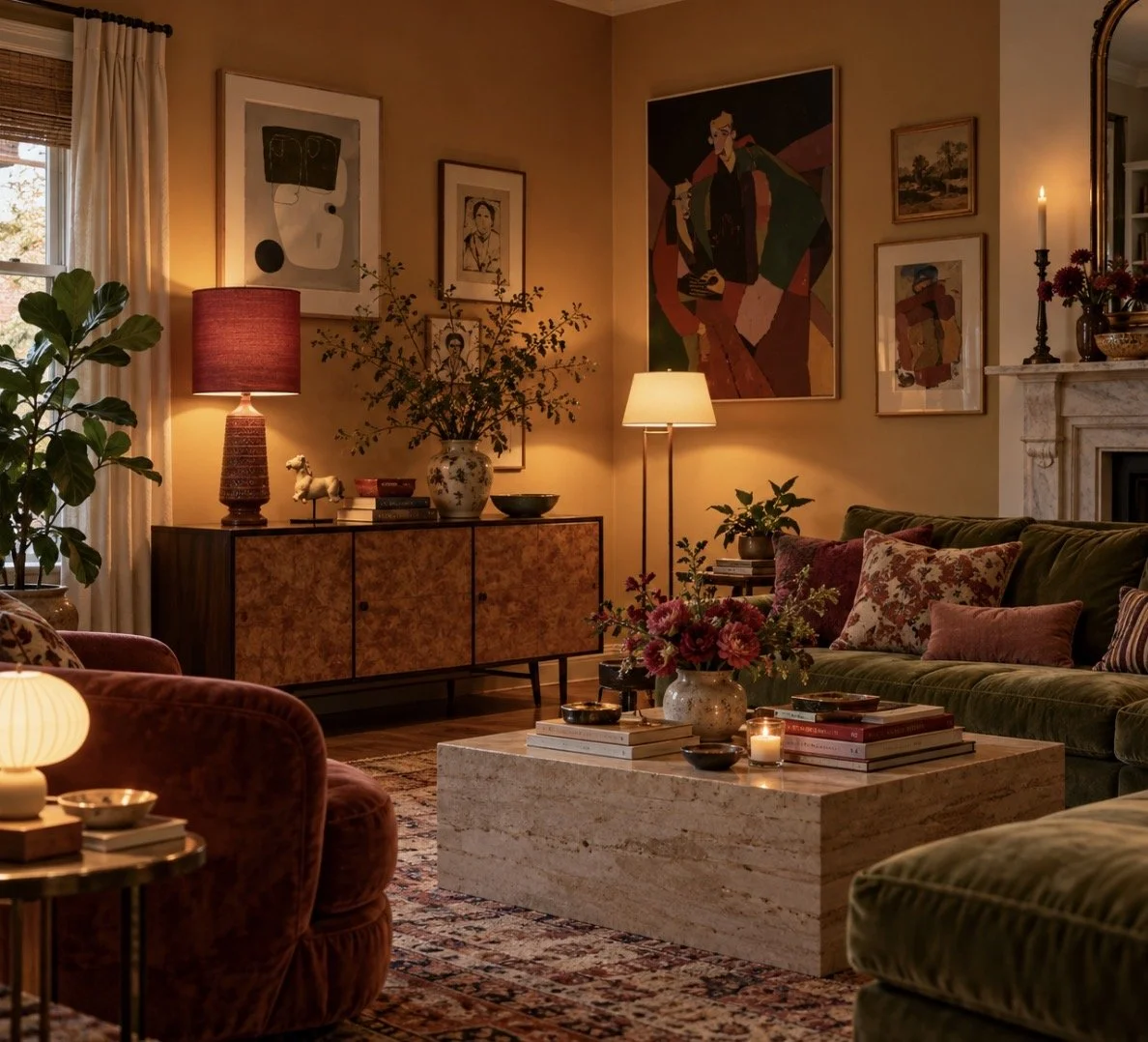
Here's the thing about decorating.
When a room feels wrong, our instinct is usually to buy something.
Another pillow. A different rug. A new piece of furniture. Maybe if we just find the perfect coffee table, everything will finally come together.
But sometimes the problem isn't what you have. It's how everything is working together.
Lighting is one piece of that puzzle.
Color, proportion, layout, texture, and the way you actually use the space all play a part.
Learning to recognize what's missing before you start shopping is one of the most useful decorating skills you can develop.
It's also the thinking behind Room Reset, my guide to figuring out why a room isn't quite working and making thoughtful changes that bring it closer to the home you actually want.
Less buying random things and hoping for the best. More understanding what you love, what your room needs, and how to bring the two together.
Try This Tonight.
Before you order another lamp, try moving around the ones you already have.
Turn off the overhead light. Experiment with different combinations. Move one into a corner you've been neglecting. Try a warmer bulb.
See what happens.
You might discover that your room doesn't need an entirely new decorating scheme.
It just needed to be seen in a different light.
And maybe, just maybe, you can cancel that throw pillow order.
